YEMOY
TLPPC Technology
The TLPPC principle: YEMOY converters process only half of the power for the same service => a factor of 2 gained on every key criterion
≤99% efficiencyHeat lost: ≥10kW
≥99.5% efficiencyHeat lost: ≤5kW(divided by at least 2)
TLPPC in datacenters: BBU & CBU
BBU: Battery Backup Unit, for backup batteries.
CBU: Capacitor Backup Unit, to smooth GPU power demand.
Why BBUs
The grid powers the datacenter; the BBU does nothing.The BBU batteries power the datacenter.
Why CBUs
The power drawn from the grid is constant: the flow leaving it keeps the same size in both phases.
High consumption: part comes from the grid, part from the supercapacitors.Consumption drops: the grid recharges the supercapacitors through the CBU.
Overview: grid, BBU, CBU, GPU
The grid and the CBUs power the GPUs.The grid powers the GPUs and recharges the CBUs.The BBUs take over and power the GPUs.
The TLPPC innovation
Conventional converter
Current rises → losses riseMaximum current → maximum losses
Yemoy TLPPC
Stable currentStable current
The impact of the innovation
TLPPC vs state of the art
50%material cost and carbon footprint
50%losses
Comparative performance
- Losses@vBattMin
- Losses@vBattMax
View the data
| Series | kW | W |
|---|---|---|
| Losses@vBattMin | -100 kW | 980 W |
| Losses@vBattMin | -80 kW | 725 W |
| Losses@vBattMin | -60 kW | 497 W |
| Losses@vBattMin | -40 kW | 297 W |
| Losses@vBattMin | -20 kW | 124 W |
| Losses@vBattMin | 0 kW | -21 W |
| Losses@vBattMin | 20 kW | 124 W |
| Losses@vBattMin | 40 kW | 297 W |
| Losses@vBattMin | 60 kW | 497 W |
| Losses@vBattMin | 80 kW | 725 W |
| Losses@vBattMin | 100 kW | 980 W |
| Losses@vBattMax | -100 kW | 513 W |
| Losses@vBattMax | -80 kW | 389 W |
| Losses@vBattMax | -60 kW | 276 W |
| Losses@vBattMax | -40 kW | 172 W |
| Losses@vBattMax | -20 kW | 79 W |
| Losses@vBattMax | 0 kW | -5 W |
| Losses@vBattMax | 20 kW | 79 W |
| Losses@vBattMax | 40 kW | 172 W |
| Losses@vBattMax | 60 kW | 276 W |
| Losses@vBattMax | 80 kW | 389 W |
| Losses@vBattMax | 100 kW | 513 W |
- Losses@vBattMin
- Losses@vBattMax
View the data
| Series | kW | W |
|---|---|---|
| Losses@vBattMin | -100 kW | 154 W |
| Losses@vBattMin | -80 kW | 113 W |
| Losses@vBattMin | -60 kW | 77 W |
| Losses@vBattMin | -40 kW | 46 W |
| Losses@vBattMin | -20 kW | 18 W |
| Losses@vBattMin | 0 kW | -5 W |
| Losses@vBattMin | 20 kW | 18 W |
| Losses@vBattMin | 40 kW | 46 W |
| Losses@vBattMin | 60 kW | 77 W |
| Losses@vBattMin | 80 kW | 113 W |
| Losses@vBattMin | 100 kW | 154 W |
| Losses@vBattMax | -100 kW | 223 W |
| Losses@vBattMax | -80 kW | 169 W |
| Losses@vBattMax | -60 kW | 119 W |
| Losses@vBattMax | -40 kW | 73 W |
| Losses@vBattMax | -20 kW | 32 W |
| Losses@vBattMax | 0 kW | -5 W |
| Losses@vBattMax | 20 kW | 32 W |
| Losses@vBattMax | 40 kW | 73 W |
| Losses@vBattMax | 60 kW | 119 W |
| Losses@vBattMax | 80 kW | 169 W |
| Losses@vBattMax | 100 kW | 223 W |
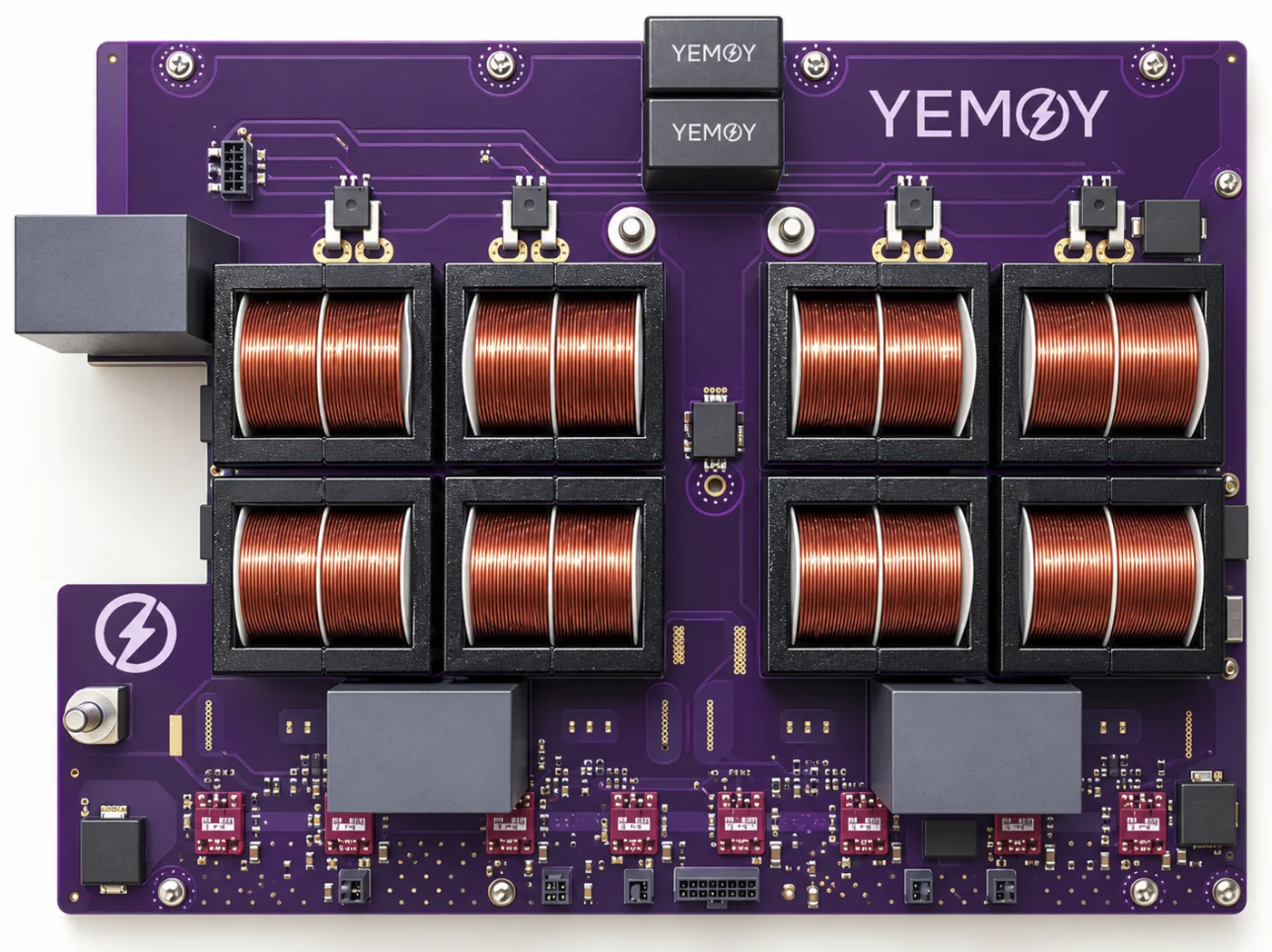
Measured performance at 800 VDC
- Discharge
- Charge
View the data
| Series | V | Efficiency |
|---|---|---|
| Discharge | 520 V | 99.69 % |
| Discharge | 600 V | 99.63 % |
| Discharge | 680 V | 99.61 % |
| Discharge | 760 V | 99.67 % |
| Charge | 760 V | 99.59 % |
| Charge | 680 V | 99.55 % |
| Charge | 600 V | 99.53 % |
| Charge | 520 V | 99.54 % |
| Charge | 440 V | 99.57 % |
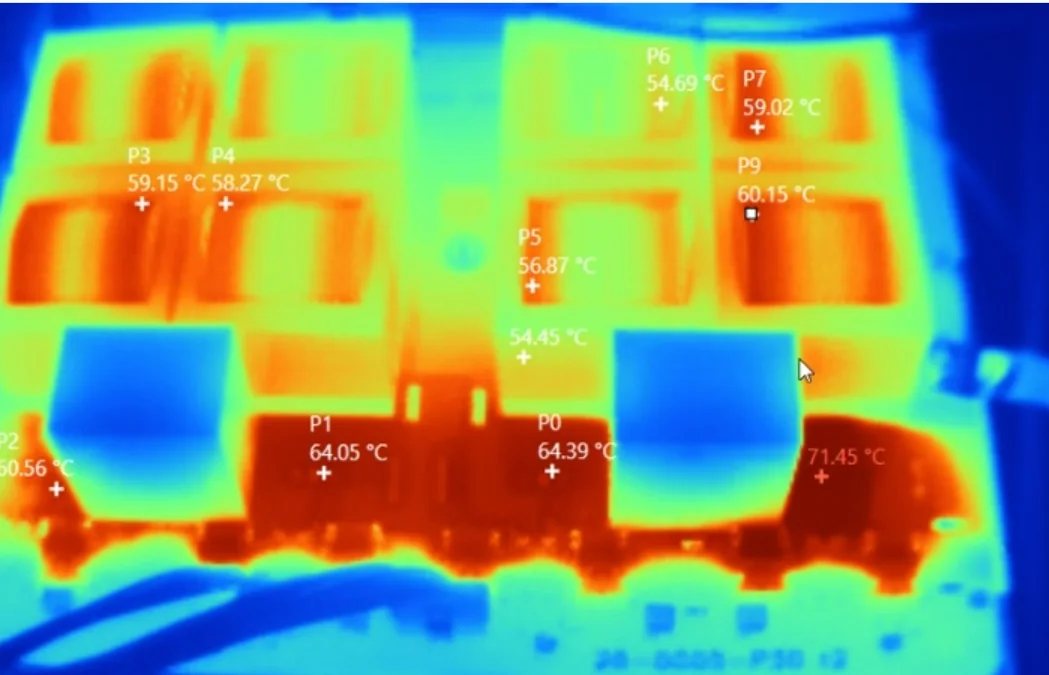
Temperatures after 30 minutes of operation at 800V/120kW
- Semiconductors <65°C
- Inductors <80°C